Sintra Day Trip: From the Peaceful Parque de Monserrate to the Bustling Palácio da Pena
UNESCO World Heritage Sintra: from the tranquil gardens of the Parque de Monserrate to the bustle of the Palácio de Pena – my day trip from Cascais, with insider tips.
Sintra, Portugal: A Day Trip from Cascais – Tips & Highlights
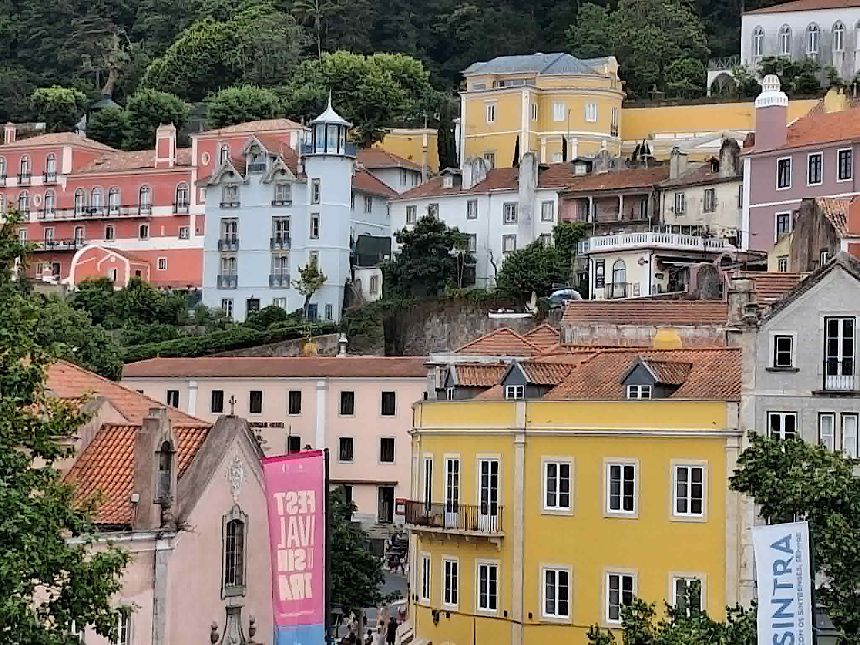
During my stay in charming Cascais, I took a day trip to Sintra – and it's an absolute must! This pretty little town, roughly 25 km from Lisbon, has been a UNESCO World Heritage Site since 1995. Old palaces, wonderful gardens and its hillside setting make Sintra an essential stop on any holiday in and around Lisbon.

On the Road with Hugo: From Cascais to Sintra
A van from the company Boost Portugal gets us from Cascais to Sintra in around 20 minutes. Hugo turns out to be an excellent guide and driver who knows the area like the back of his hand. We pass the Autódromo do Estoril, home to Formula 1 races between 1984 and 1996. Ayrton Senna, the racing driver who later died in a tragic accident, won his first Grand Prix here in 1985.
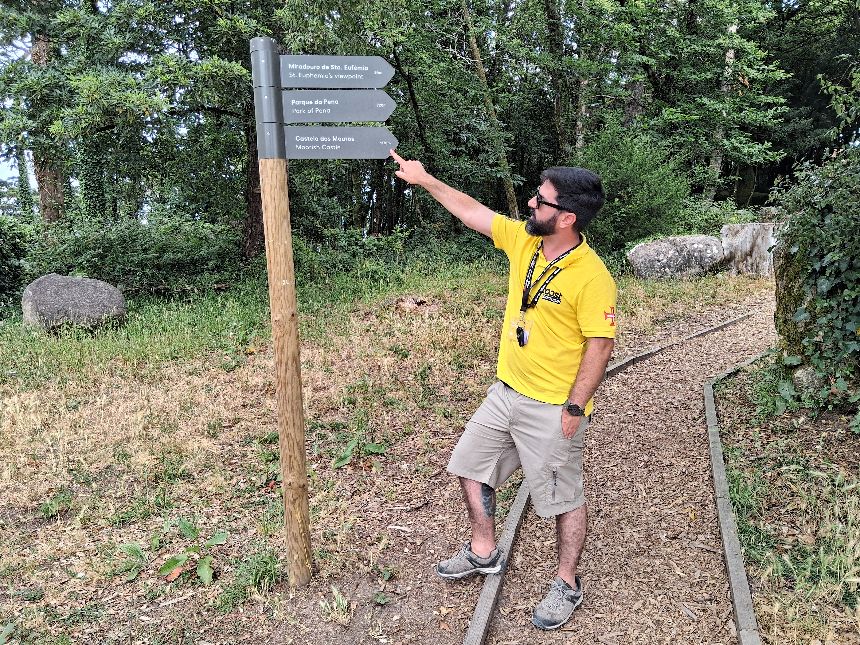
Parque de Monserrate – the Hidden Gem
Our route takes us straight up into the hills to the Parque de Monserrate. "This is my absolute favourite spot in Sintra," Hugo tells me, "a real hidden gem." Most visitors to Sintra are mainly interested in the Palácio da Pena – but more on that later.
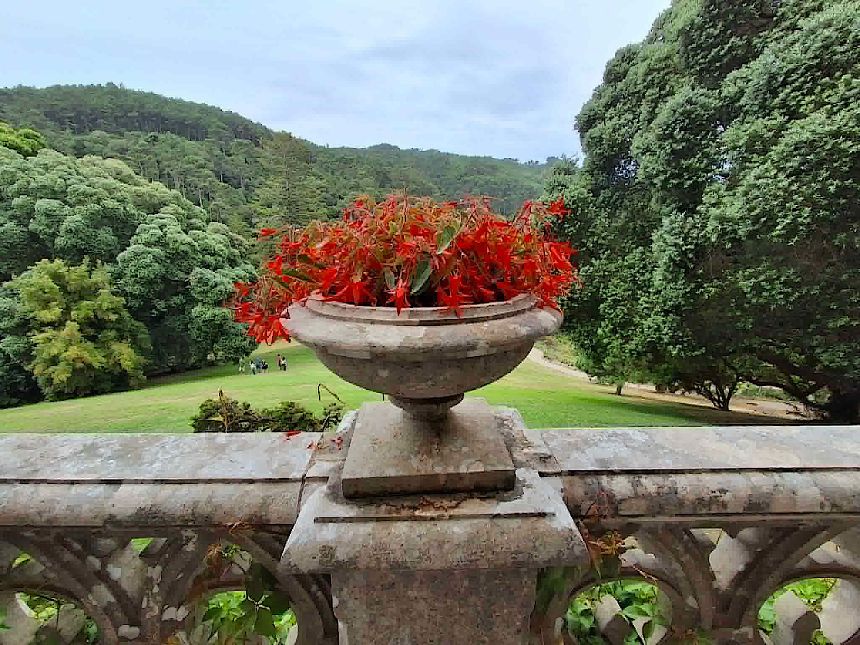
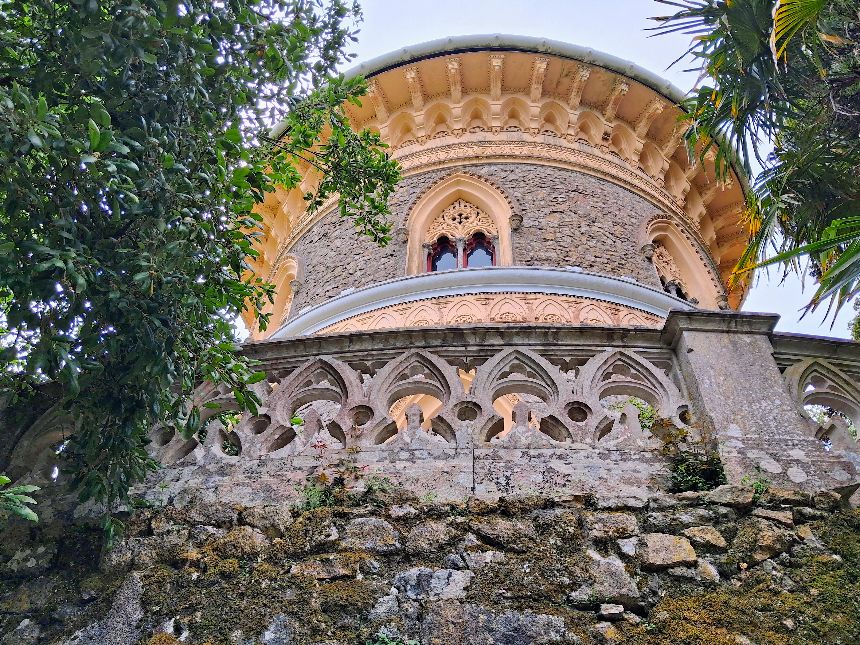
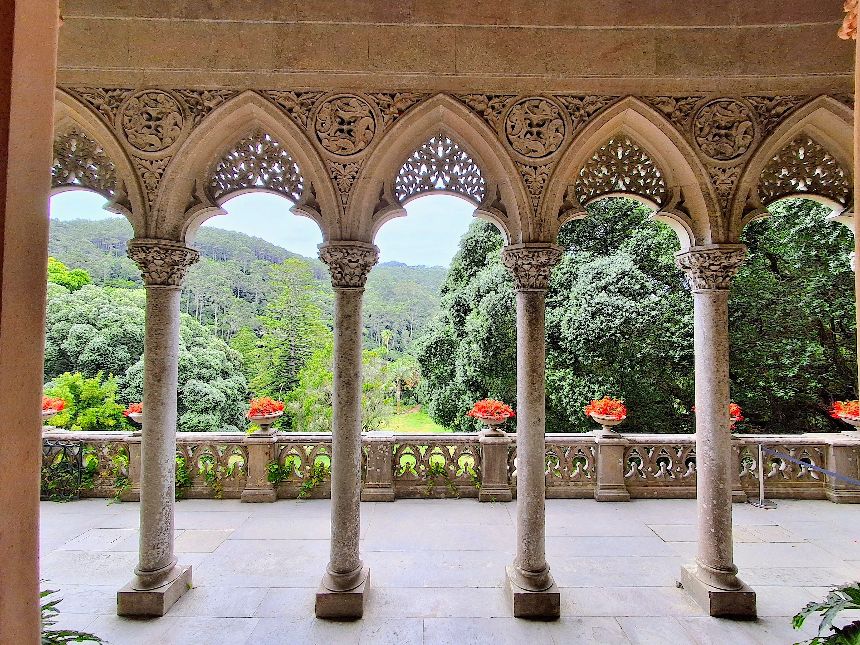
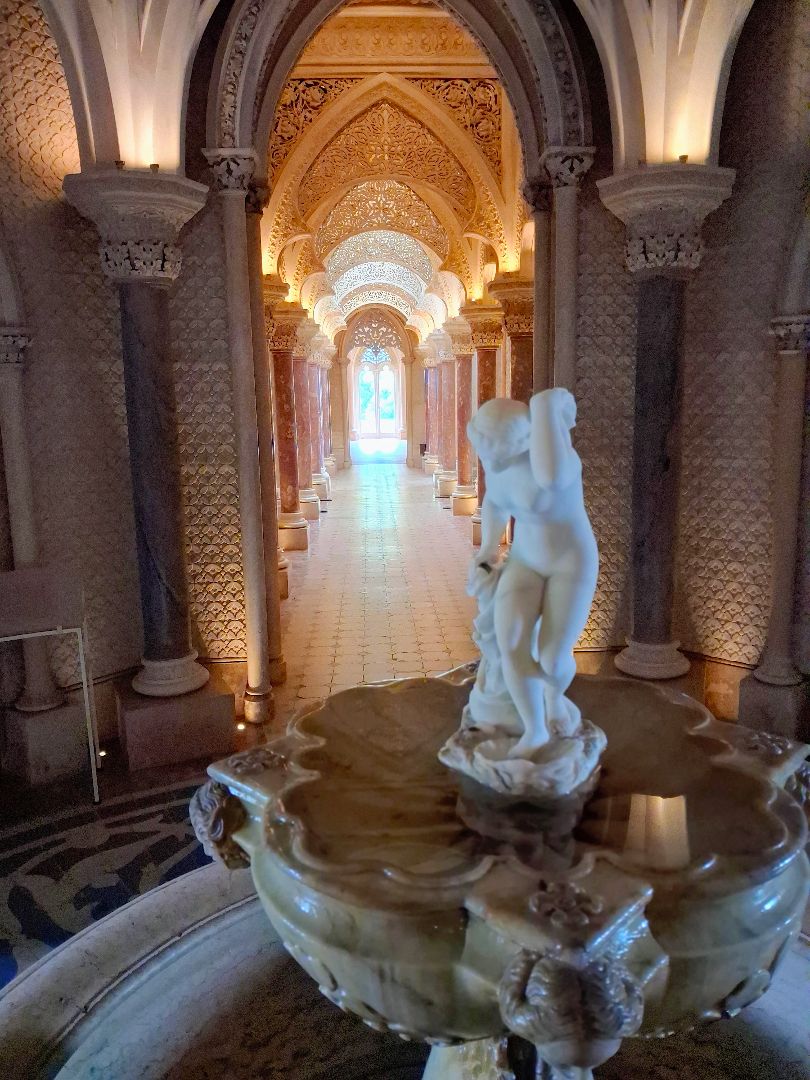
The real story of the Parque de Monserrate began in 1856, when a British art collector and textile magnate named Francis Cook became the first Viscount of Monserrate and owner of the Monserrate estate. It was around this time that the palace was built, blending Gothic, Indian, and Moorish influences. This grand building is surrounded by one of the most beautiful botanical gardens in Portugal.
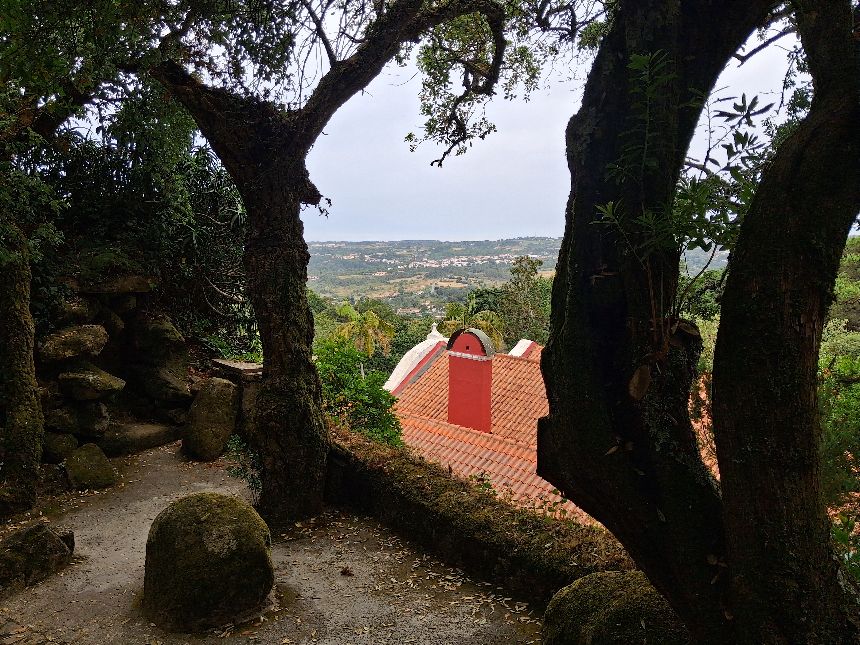
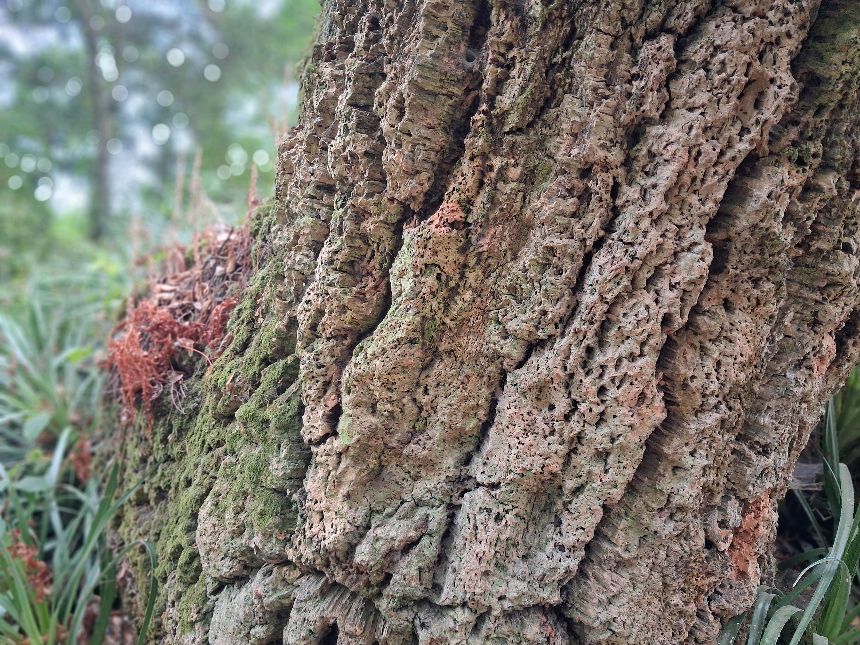
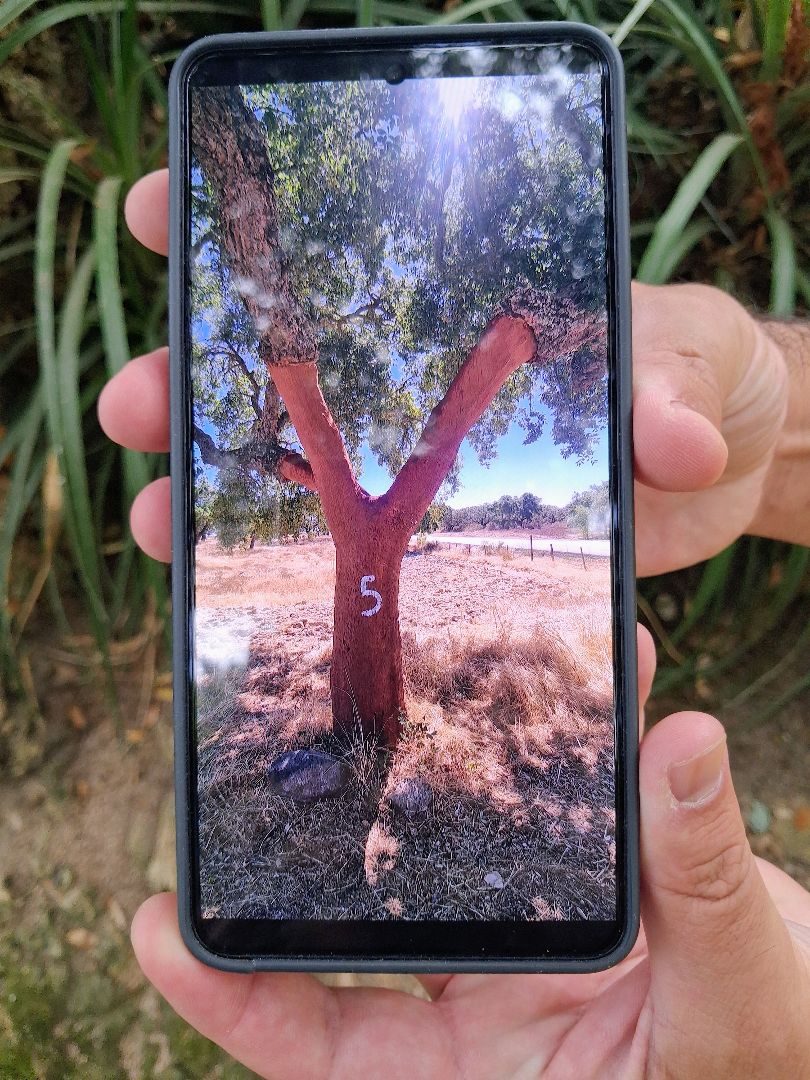
Our walk begins on the left-hand side at the park entrance. Countless steps lead us past trees and plants from all over the world. In total, the park is said to be home to some 3,000 species from around the globe, including man-sized ferns, strawberry trees, agaves, palms, bamboo, camellias and, above all, cork oaks. "Portugal is the world's largest producer of cork, with a share of over 50 percent," Hugo explains as we pass a particularly impressive cork oak. The bark is only stripped from the tree once every nine years, without causing it any harm – so you certainly need patience if you're a cork producer! Cork oaks can live to be up to 500 years old.
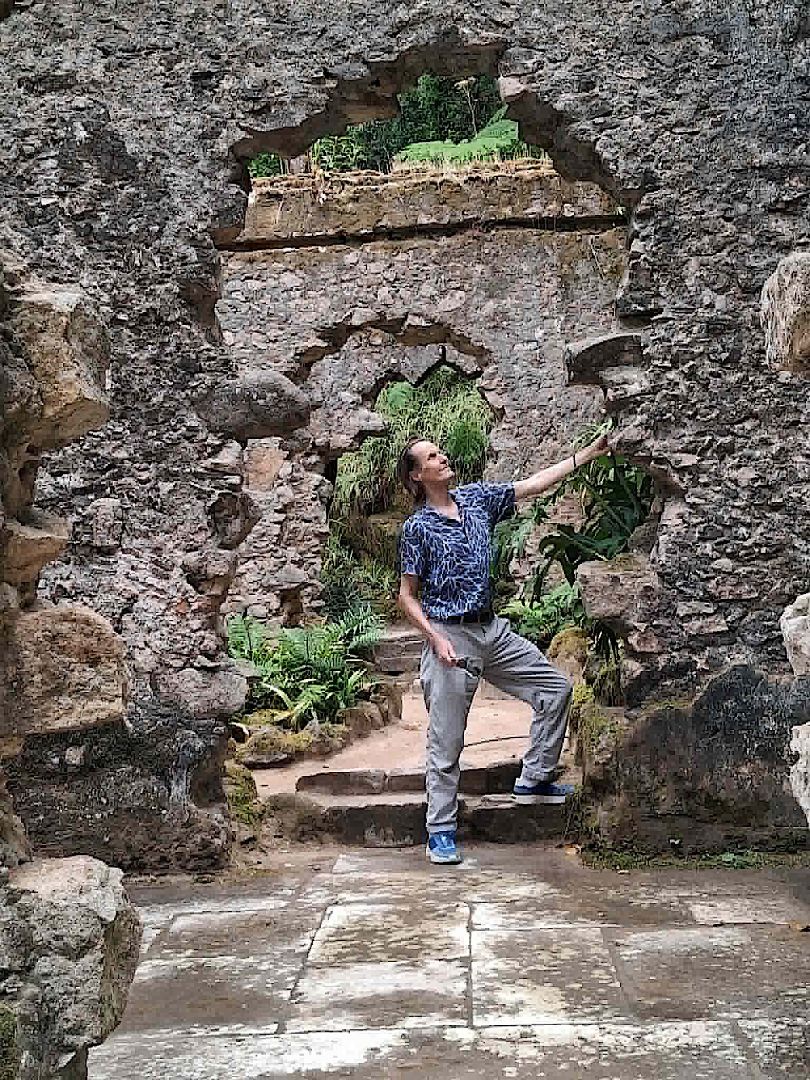
Ponds filled with water lilies and small artificial waterfalls line our path. We come across some ruins that, Hugo tells me, were built purely to add to the magic of the place – a folly designed to look ancient, now almost entirely reclaimed by moss and ivy. Moss-covered stone arches seemingly rising out of nowhere, framed by ferns: it's beautifully atmospheric, and of course I have to stop for a photo.
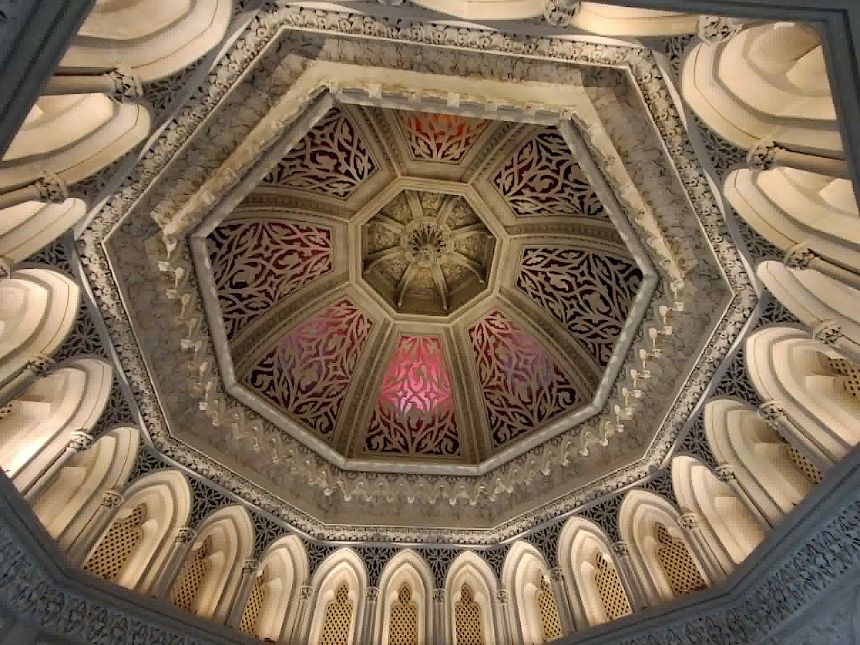
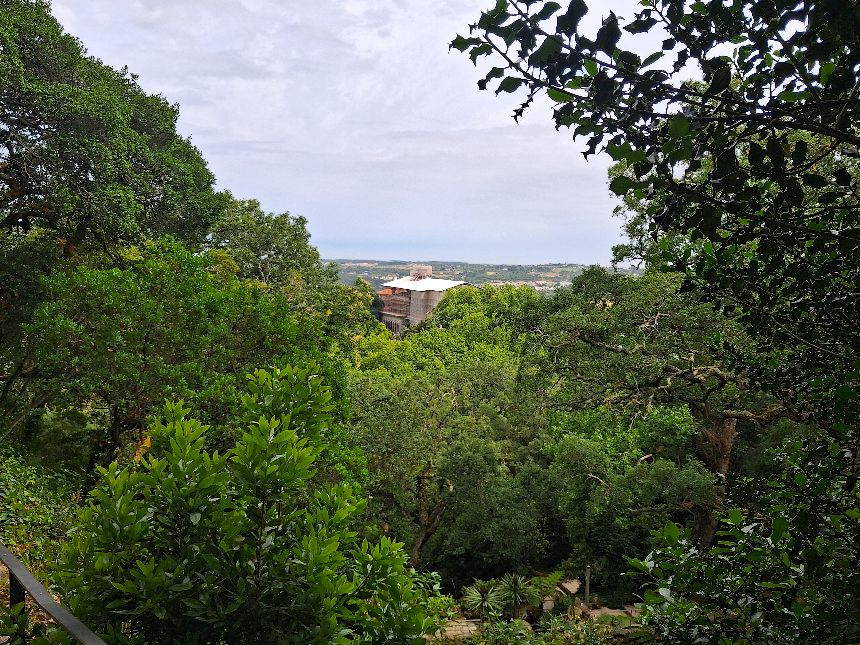
Eventually we reach the palace, which is sadly covered in scaffolding at the moment. At least on one side I manage to get a photo without any distracting clutter. You can also admire this extraordinary building, with its octagonal dome, from the inside. I can easily imagine Hugo spending a quiet Sunday morning here, away from the tourist bustle of Sintra. The park isn't on the standard coach-tour route, which only adds to its appeal.
Tip: Be sure to set aside two to three hours for the palace visit – it's well worth it! Admission without a guided tour costs €12 per person (as of July 2026). You will find further information here.
Lunch at the Historic Hotel Lawrence'S
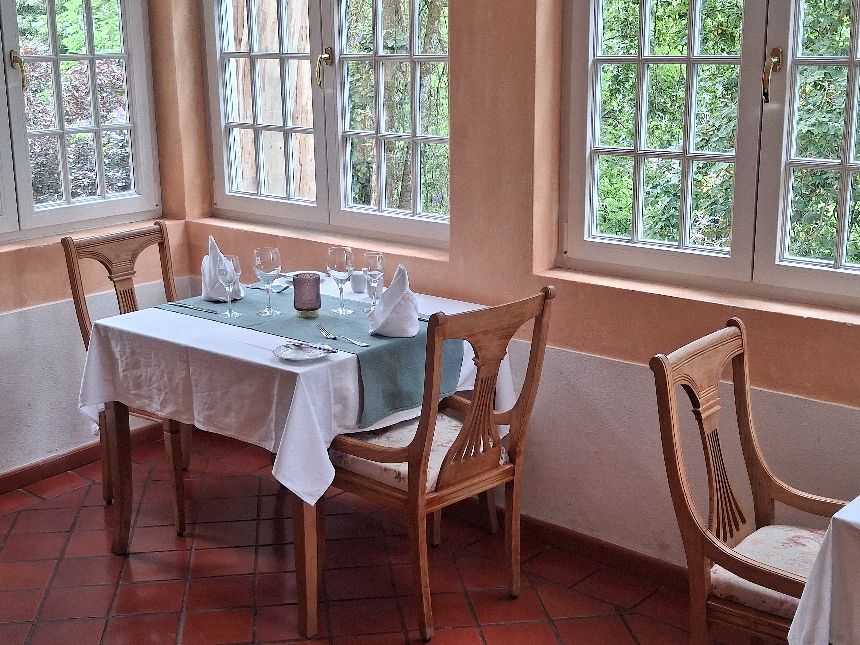
After all the ups and downs of the Parque de Monserrate, it's time for lunch. The historic Hotel Lawrence's, reputed to be the oldest lodging house on the Iberian Peninsula, is the perfect spot. While outside tourists snap photos in front of the façade, we're the only guests in the storied restaurant – beautifully laid tables and, through the windows, a view over Sintra's wonderful countryside. I even manage a bit of small talk in Portuguese with Armando, our attentive waiter, though my limits are quickly reached. Oh, and the pasta was excellent, by the way!
In the Thick of It: Sintra Town Centre
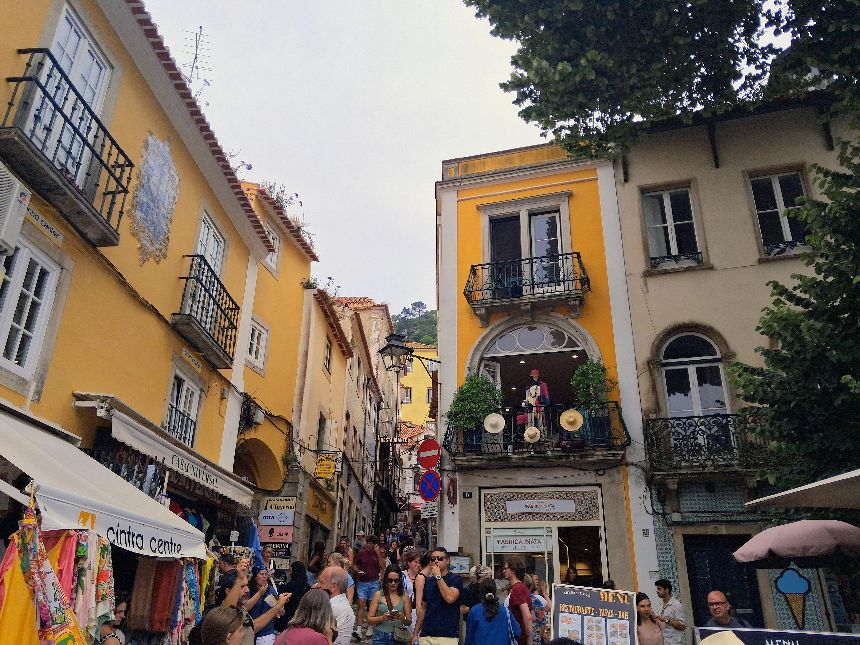
Suitably fortified, we head into the bustle of Sintra's town centre. Once again it's up and down, often over cobblestones – flip-flops and heels have no place here. The alleys with their colourful front doors are in places so narrow that progress through the crowds is slow going. What a contrast to the tranquillity of the Parque de Monserrate!
Sweet little Sins
Naturally, we can't have coffee without trying a pastel de nata. The best place for that – as the name rather gives away – is Fábrica da Nata. Sadly, we're far from the only ones in need of a caffeine boost. But Hugo has a solution here too: just a few metres away is a branch of the café with fewer people and a small roof terrace, from which you can watch the goings-on in the alleys below. After all that climbing, you needn't feel guilty about indulging in a little sweet sin.
Another Palace
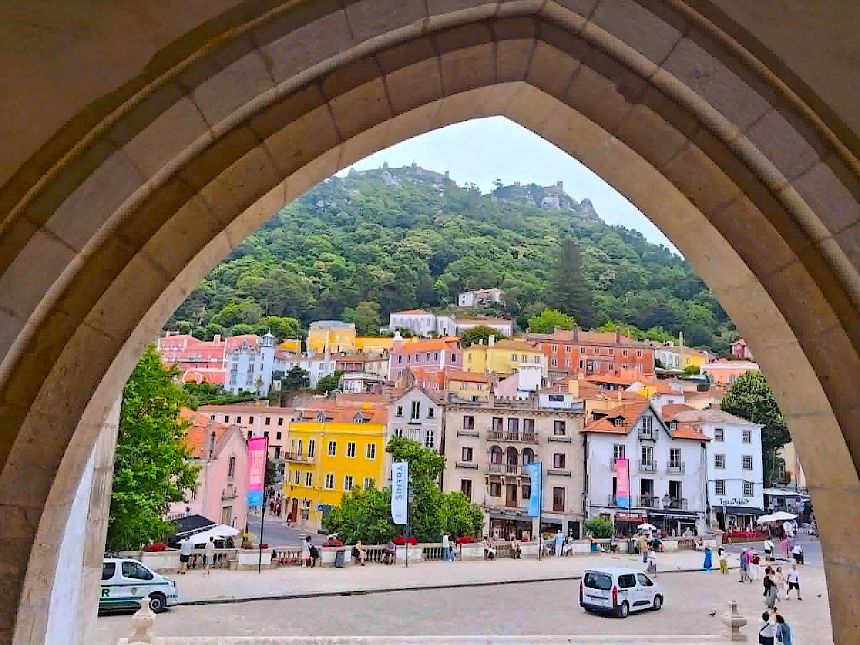
Suitably restored, we stroll on to the heart of the old town: the Palácio Nacional de Sintra, easily recognisable by its two towering, cone-shaped chimneys. For five centuries it served as the summer residence of the Portuguese kings. From here you get a lovely view over the colourful houses of the old town – Instagram is calling! At the same time, you can also spot the Castelo dos Mouros on a nearby hill, built by the Moors in the 9th century and rebuilt a thousand years later as a romantic ruin.
A View Over Sintra
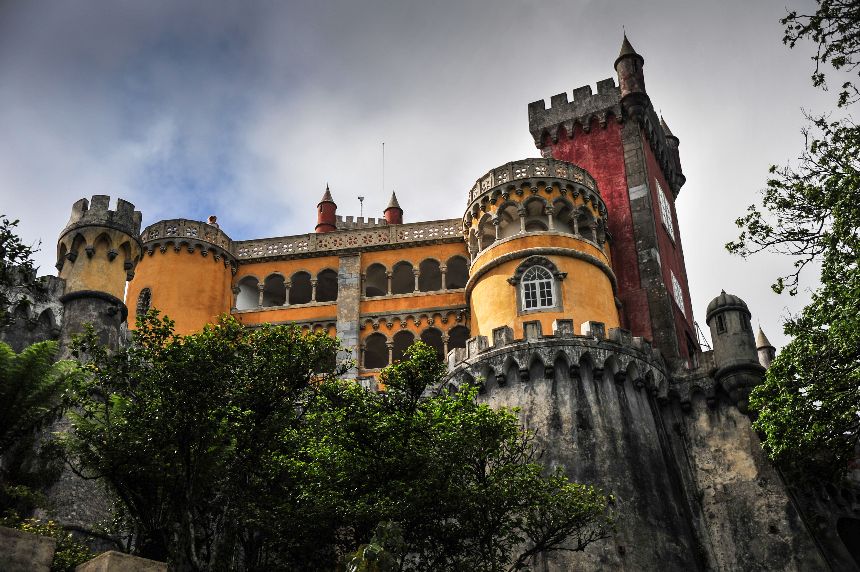
Hugo then drives me to the Miradouro de Santa Eufemia, a viewpoint just a few minutes outside the old town and away from the main tourist crowds. From up on the hill, even on this cloudy day, we have a breathtaking view stretching all the way to Lisbon. "Around 400,000 people live in the Sintra area. The region is very popular thanks to its natural beauty and the fact that life here is cheaper than in the capital," Hugo tells me. I can also make out the Palácio da Pena, that canary-yellow palace which, in the 1840s, was the private obsession of a king. This monument is, in a sense, Portugal's answer to Germany's Neuschwanstein Castle, and it's extraordinarily popular – the crowds there are correspondingly large. Honestly, I prefer the tranquillity of the Parque de Monserrate, where I encountered hardly anyone all day.
My Verdict on Sintra
A day trip from Lisbon and the surrounding area comes highly recommended. I wouldn't advise driving a hire car, given the narrow, often winding roads. It's more relaxing to travel by train (around 40 minutes from Lisbon Rossio) or, better still, on an organised excursion with a local operator, as I did with Boost Portugal. Exploring on foot requires a good level of fitness, as it's almost constantly uphill. Allow an hour and a half to walk from the train station to the Palácio da Pena. The best way to reach the Parque de Monserrate is by bus or taxi.
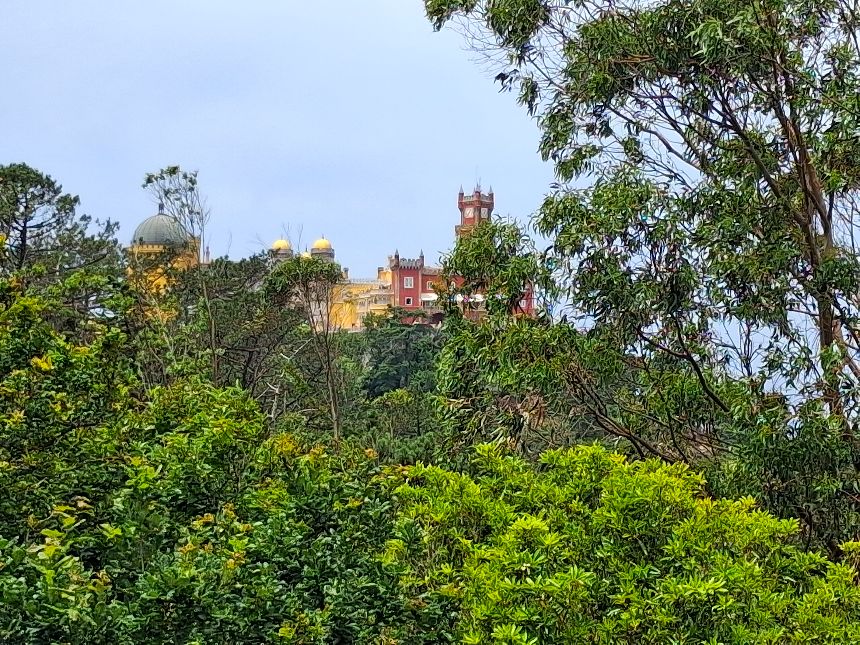
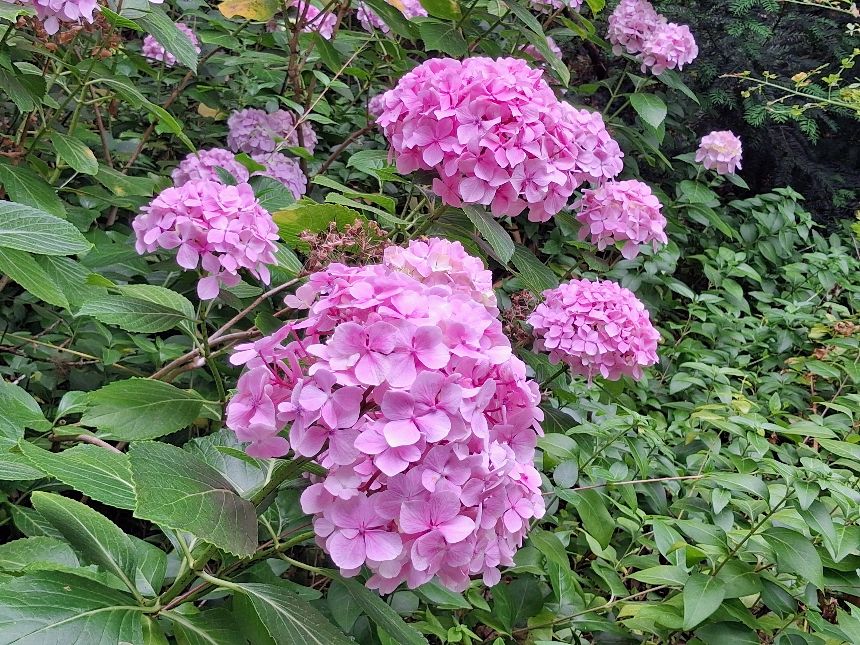
Sintra Natural Park has a mild climate. In the lush, green Sintra mountains, temperatures are a few degrees cooler and more pleasant than on the coast. Rainfall and humidity are at their highest here, which explains the area's lush vegetation.
More from Cascais
Sintra made for the perfect day trip during my stay in charming Cascais – from there, the little town is just 20 minutes away. If you'd like to find out more about the coastal region around Cascais and Estoril, check out my full guide to Cascais and Estoril for further tips on beaches, sights and restaurants.
*Note: My trip was supported by Turismo Cascais. This has in no way influenced my evaluations.*
PROMOTION